
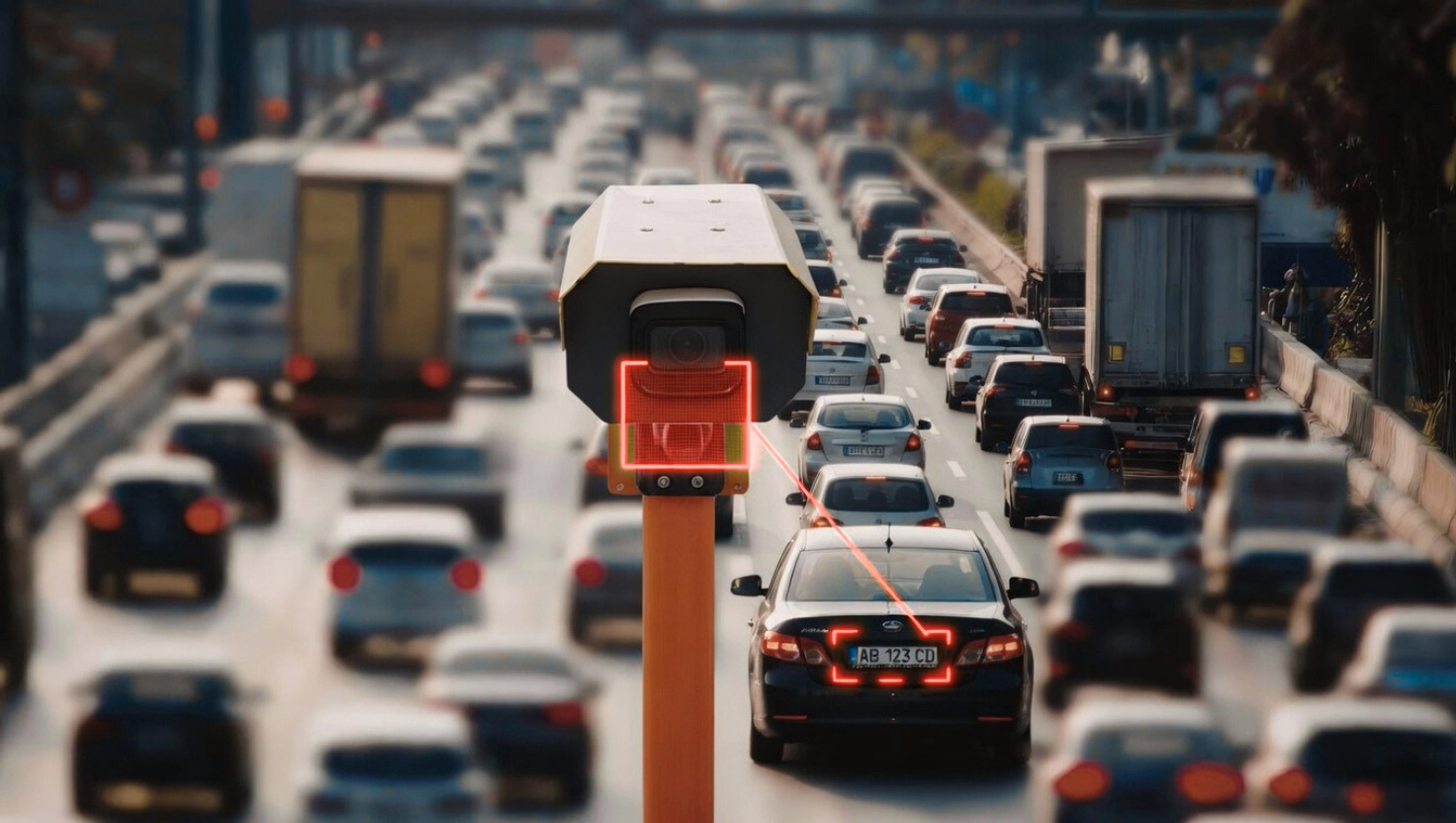

S. 447 does not merely regulate a narrow law-enforcement tool. It codifies a broad ALPR framework, assigns multiple agencies roles in its use and permitting, and leaves sufficient discretion in the statute to raise real concerns about expansion over time.
Do we need to explain why this is a bad idea?
Here’s why.
The first problem is that this creates a government surveillance system.
Section 23-1-235(D) This section uses vague, broad language that, quite frankly, could allow agencies to interpret the authorization expansively over time.
(D) An automatic license plate reader system may be used:
(1) by a state, county, or municipal law enforcement agency for the comparison of license plate data held by the National Crime Information Center or other database or hot list, and for other law enforcement or criminal justice purposes, including the operation and maintenance of an automatic license plate reader database by SLED;
(2) to regulate parking;
(3) to control access to secured areas;
(4) to promote public safety, deter crime, or address property theft and organized retail crime in coordination with law enforcement; or
(5) by the Department of Public Safety and the Department of Transportation or its agents to collect tolls and to provide for the efficient and safe movement of vehicles on state highways.
Notice this phrase: “for other law enforcement or criminal justice purposes.” Who decides what that actually means?
Here’s another example: “to promote public safety, deter crime.” Are there any specifics, or will this just be defined later by new rules or laws?
Next up, privacy and data collection concerns. According to one Senator, during a recent hearing on this bill, he stated: "Don’t worry, if someone abuses the data, the bill has protections for that." So, everyone, calm down, because the law includes language to stop the abuse of citizens' data. Only, last we checked, people who want to break the law tend to ignore it. Plus, SC doesn't have a wonderful track record of enforcing laws as written.
And are these the primary parts in the bill that are supposed to protect people's data?
Section 23-1-235(E) “License plate reader data obtained for the purposes described under this section must not be shared for any other purpose.”
Section 23-1-235(C) It is a misdemeanor to knowingly request, use, or obtain data under false pretenses or for unauthorized purposes, punishable by fine and imprisonment.
Section 23-1-235(H) Government entities may not sell license plate reader data.
None of these limits unnecessary data collection. And if someone is harmed, they would have to file a complaint, hope it is taken seriously, and probably prove misuse by law enforcement or government officials.
Here’s another section in the bill that deserves a head-scratch.
Section 23-1-235(D)(5) by the Department of Public Safety and the Department of Transportation or its agents to collect tolls and to provide for the efficient and safe movement of vehicles on state highways.
Tolls? Could this part have anything to do with Bill S. 831, which seeks to codify more toll roads?
Other concerns also came up during a recent hearing on this bill.
If someone who had committed no crime still had his movements recorded by the government, could another person obtain that information and build a pattern of life around him? A response to that: “probably accurate, and we need to fix that.” Fix that? How about throwing this bill in the trash?
Another concern was about nonstop recording. One senator asked whether these systems would run continuously, and the answer at the hearing was yes.
Data security and hacking were also major concerns. One Senator warned that once data is stored, it’s only a matter of time before someone accesses it. He mentioned past government data breaches and doubted that small law enforcement systems in South Carolina could keep out hackers or foreign threats.
Why is this bill needed? South Carolina already has laws against most of the actions this bill is supposed to address.
Supporters say law enforcement needs every tool available in an emergency. That argument would carry more weight if the bill were narrowly written for true emergencies. Instead, it authorizes a much wider surveillance infrastructure and asks the public to trust that it will only be used sparingly.
There’s no reason to pass this bill. If these cameras are already in use in some places, making them part of the law would make this intrusive practice permanent.
Disclaimer: The views expressed in this article are those of the author and do not constitute legal or professional advice. ConservaTruth assumes no liability for any actions taken based on this content. Readers are encouraged to review the bill text themselves. Read more.

Subscribe to ConservaTruth's Email Newsletter for curated insights on South Carolina's legislative activities and conservative viewpoints, delivered straight to your inbox! With vetted and easy-to-understand information, our newsletter empowers you to become an informed and engaged citizen, actively participating in safeguarding our cherished Constitutional values. Don’t miss out on crucial updates—join our community of informed conservatives today!

Comments