
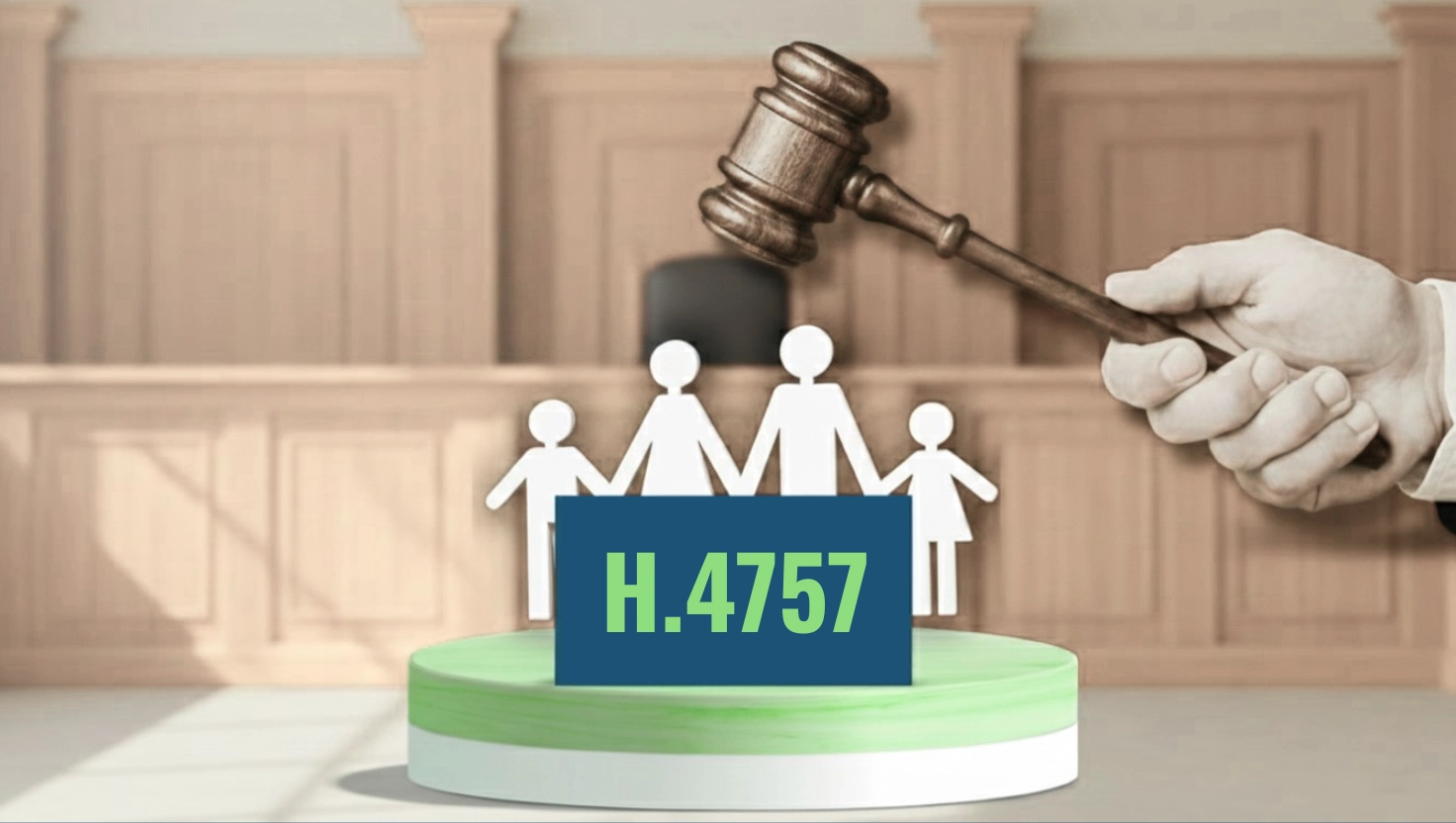

Our nation has consistently maintained that parents possess a fundamental right to raise their children as they see fit. This principle has been upheld in numerous Supreme Court cases and reflects the American people’s longstanding commitment to parental rights, rights that are inalienable and already belong to parents.
Please Put It Into Law
In recent years, states have faced a strong push to enact legal chapters explicitly enumerating parental rights.
H.4757, the “Parental Rights Act,” is South Carolina’s response to that push.
These types of bills offer a comforting promise, one that many parents and parental rights advocates have been begging to see put into law.
Roughly eighteen states have already codified parental rights into their legal codes. States started codifying these rights to supposedly strengthen protections against government overreach, especially in public schools.
The pandemic largely catalyzed the push for parental bills between 2020 and 2023. During this time, public schools forced parents to put masks on their children or consider medical interventions as a prerequisite for school participation. When schools shifted to online learning, that transition revealed the horror of what their children were being taught, including instruction on same-sex topics, social transition steps, and liberal woke agendas.
Beyond the classroom, parents are frequently in an uproar regarding the age of medical consent.
In response to the government’s continued interference in parental decision-making, parents have turned to the state legislature to fix it.
However, before agreeing with a legislative remedy, we must understand the inherent nature of the law itself:
“Laws are unnatural, man-made 'instructions' and frameworks, often reactive in nature, creating parameters within which people are supposed to act—with clear instructions on how to conduct carefully defined 'legal' activities, as well as penalties for breaking the limits.” (Laws Are Reshaping Humanity: Are We Ready to Put a Halt to It?)
Instructions Written Into H.4757
H.4757 touches two areas of law. It proposes creating a new chapter in Title 59, the Education title, and making substantial changes to Section 63-5-340, which governs health services provided to minors without parental consent.
Bill H.4757 moves parental rights into the hands of the government to manage. Why would we want that?
The bill is several pages long and packed with what can only be described as Code Red instructions.
The first Code Red appears immediately:
“Section 59-28-320. (A) The liberty of a parent to the care, custody, and control of the parent's child, including the right to direct the upbringing, education, healthcare, and mental health of the child, is a fundamental right. (B) The State shall not substantially burden the fundamental rights of a parent under this article unless the State demonstrates that the burden, as applied to the parent and the child, is in furtherance of a compelling state interest and is the least restrictive means of furthering that compelling state interest.”
Most parents would feel good reading this. It is precisely the language parents have been pushing for.
Pause here. Who decides if an infringement even occurred? Answer: The State itself, through its own agencies and boards, makes that determination.
Think of a child complaining to the principal about a teacher, while the principal, the school board, and the state education board get the final say.
That may sound exaggerated.
Keep reading.
How the State Decides if an Action is an Infringement - The Exhaustion Section (Gatekeeper)
The bill establishes a multi-step administrative review process for parental rights complaints.
“Section 59-28-350. (A) As provided in this section, a parent alleging a violation of this article by an LEA may seek relief through administrative channels before the LEA governing body and the State Board of Education as provided in subsections (B) and (C). After exhausting all of these administrative remedies, the parent may bring a private civil cause of action in circuit court.”
Next: The process begins with the parent filing a complaint with the Local Education Agency (LEA). “Section 59-28-350. (B)(1) Each LEA shall establish a designee to receive and investigate complaints under this section...”
And then: The State Board of Education (SBE) does not review a complaint unless the LEA fails to fix it first: “Section 59-28-350 (C) If the LEA does not remedy the complaint through its final administrative action, the parent may appeal to the State Board of Education pursuant to the Administrative Procedures Act. The State Board shall review the matter under its established procedures and issue a written final decision within fifteen business days. If the State Board determines that a violation has occurred, the State Board may issue a remedial order requiring corrective action…”
Even if the SBE agrees with the parent and orders the school to fix it, the parent must still exhaust this step before filing suit in circuit court, where they can seek damages per violation.
“Section 59-28-350 (E)(1) After all available administrative remedies described in subsections (B) and (C) have been fully exhausted, a parent may bring a private cause of action in circuit court against the LEA and may recover declaratory relief, injunctive relief, liquidated damages of five thousand dollars per violation, and reasonable attorney's fees and costs.”
“Section 59-28-350 (2) The circuit court shall dismiss any action filed before exhaustion of administrative remedies as required in this subsection unless the parent demonstrates that immediate judicial relief is necessary to prevent imminent irreparable harm to the parent's child.”
Oh, and the Attorney General may, or may not, intervene at their discretion. “Section 59-28-350 (D) The Attorney General may conduct independent investigations of alleged violations…”
Clearly, the fundamental affirmation part does not automatically protect parents.
Let’s say a parent ends up in court. The State defends itself by saying its action serves a "compelling state interest." That sounds like a high bar, but the courts have accepted it before, including in neglect cases and vaccine-related cases. For example, the State may argue that requiring certain vaccinations is necessary to prevent the spread of infectious disease, even when a parent objects on religious grounds.
After reading all of this, does it sound like there is a good chance the parent will come out winning?
A parent faces a steep uphill path when the same State accused of imposing a substantial burden also controls the process for deciding whether that burden occurred in the first place.
The Words
What about the words in the bill? To understand how the words in a bill can completely negate the stated purpose, read Tip One for Reading a Bill:
Ambiguous Words and Sinkholes
Compelling State Interest, Least Restrictive Means, Substantial Burden, HIPAA exemption, authorized by law, Minimum Standards, Unless clauses, Good Faith (all over this bill), Substantial Compliance, Imminent Irreparable Harm, Reasonable Choices.
Woke Agenda Identifiers and Threats to Individual Freedom and Privacy
Gender Identity, Gender Expression, Sexual Orientation, Data Collection, Biometric Data, DNA Records.
Money Pits and Power/Action Words
Adopt, Implement, Establish, Oversight, Review, Enforce. Adopting Policies and Procedures; Oversight and Enforcement.
All of these terms collectively create opportunities for government overreach and inconsistent enforcement.
(Tip One: Be concerned if you do not clearly understand what is being written into law.)
Get Out of Jail Free Card
If you thought you could at least sue for damages, think again. The bill creates a significant liability shield. Section 59-28-350 (H)(6) grants immunity from civil liability to entities that act in good faith.
What is in good faith?
“Good faith” is a legal standard reviewed by courts, but its meaning is shaped in advance by agency procedures, guidance, and directives that schools rely on to avoid liability.
“(6) An entity subject to the provisions of this section is immune from civil liability for damages… solely on an alleged violation of this article or section 63-5-340 arising from that act or omission, if the entity, in good faith: (a) relies upon a written consent, authorization, or direction executed by a parent as defined in this section; or (b) acts in substantial compliance with this article or written guidance or regulations issued by the Department of Public Health or the Department of Mental Health implementing this section.
Section 3. 63-5-340 Revamp
Bill H.4757 substantially revises Section 63-5-340, which governs parental consent for medical care.
It strikes the existing provision that states:
“Any minor who has reached the age of sixteen years may consent to any health services from a person authorized by law to render the particular health service for himself, and the consent of no other person shall be necessary unless such involves an operation…”
That age-based consent rule is removed from the statute.
Replaced with worse language.
Code Red Alert: At fourteen, the State is willing to hand a child barely out of middle school control over medical decisions with lifelong consequences.
“(C)(5) a healthcare provider, for the purpose of providing appropriate prenatal care... renders healthcare to a child who has attained fourteen years of age;”
Note: While current law contains a broad provider-discretion rule, H.4757 repeals it and explicitly writes prenatal care at age fourteen into the new consent framework.
The bill also expands exceptions to parental consent for when:
A parent has already provided prior consent
A parent cannot be located or contacted after a good faith effort
A person renders emergency care at the scene of an accident or emergency pursuant to Section 15-1-310
A healthcare provider or healthcare professional renders prehospital care to a minor
A person renders first aid to a minor
“(7) “Person” includes, but is not limited to, an individual, association, corporation, the State, a state agency, a municipality located in this State, or any employee, agent, or representative of any such entity.”
Pause and read this part again… but is not limited to, an individual, association, corporation, the State, a state agency, a municipality located in this State, or any employee, agent, or representative of any such entity.
All of these exceptions hand broad discretion to the ➔ State.
Conclusion
There are so many 🚨Code Red Alerts flashing in this bill that to continue would make this article never-ending.
H.4757 is a dangerous bill, and if it moves, it will get worse. The last thing parents need is their rights handed off to the State to dictate.
Parental rights are fundamental, and the strongest protection is to leave them there, outside statutory control.
Any bill proposing to codify parental rights creates these same hazards. Even H.3011- Parental Rights in Education Act.
While H.3011 may appear less intrusive than H.4757 because of its subtle introduction of a framework, that framework makes it easier for future legislation to build on it and expand state control over parental rights.
Call to Action: ❌ Do not support any parental bills of rights legislation and KILL IT.
Disclaimer: The views expressed in this article are those of the author and do not constitute legal or professional advice. ConservaTruth assumes no liability for any actions taken based on this content. Read more.

Subscribe to ConservaTruth's Email Newsletter for curated insights on South Carolina's legislative activities and conservative viewpoints, delivered straight to your inbox! With vetted and easy-to-understand information, our newsletter empowers you to become an informed and engaged citizen, actively participating in safeguarding our cherished Constitutional values. Don’t miss out on crucial updates—join our community of informed conservatives today!


Comments