

Welcome to lesson three! If you missed the other two lessons, here they are.
This lesson will help you learn how to find spending inside a bill and why spending should always be treated as a red flag.
Government has no money of its own. The state doesn’t grow money on a tree behind the State House. Every dollar the state spends comes from someone who earned it. That includes salaries, programs, contracts, and every new “solution” lawmakers package as public good.
Spending is taxation.
A bill that creates spending creates a legal obligation for taxpayers. That obligation funds either a service every taxpayer uses or a program only available to a selected group.
Also, think of this. When a bill gives money, services, or special access to one group, taxpayers outside that group are still legally required to pay for it. That’s redistribution of wealth. Someone earns it, the government collects it, and directs it to someone else who receives it.
Don’t Rely on a Fiscal Impact
In both the South Carolina House and the Senate, a fiscal impact statement (or fiscal estimate) is generally required for any legislation affecting the expenditure of money or state revenues before the bill receives a second reading. While both chambers require this statement before a vote, the Senate rules explicitly clarify that the absence of one still allows the body to debate the bill leading up to that vote.
Most people rely on a bill’s fiscal impact statement to determine if it will increase state spending.
Relying on the fiscal impact statement creates two problems. First, by the time one is created, the bill has already gained momentum, and stopping an expensive bill at that point is too late. Second, these reports focus on direct costs to the government. Sometimes they mention what an agency can handle within its current budget, and other times they state that the cost is undetermined or that there’s no impact on spending.
A bill still carries financial concerns and grows government even when the fiscal impact states otherwise.
Honestly, all bills are an expense.
Look for Spending Signals
In a bill, search for spending signals. Look for words like:
fund
program
appropriation
administer
staff
employ
contract
vendor
eligible
application
portal
regulation
implement
distribute
develop
monitor
Searching “fund” also catches state funds, federal funds, and special funds, and searching “appropriation” catches subject to appropriations.
These words scream spending. Spending also shows up through duties, systems, employees, vendors, reporting requirements, oversight, and enforcement.
If a bill tells an agency to do something, ask what it’ll take to do it. A new duty requires time and employees, and employees require salaries paid with taxpayer dollars.
Two Main Spending Categories
When reading a bill, separate spending into two categories.
1. Bills That Involve Spending
These bills increase government costs even when they skip the benefit program entirely. Look for bills that create or expand government structures like departments, offices, divisions, boards, commissions, committees, or task forces. Also watch for bills that hand agencies new duties, things like reports, inspections, investigations, enforcement, licensing, audits, studies, databases, and technology systems.
Every one of those creates work, and work requires people, systems, and money. Even a “study committee” costs something, because state employees, lawmakers, staff, and agencies spend time producing it. The bigger concern is permanence. Once the state builds the structure, it usually stays.
2. Bills That Create Programs
Look for bills that create or expand:
grants
vouchers
scholarships
reimbursements
benefits
subsidies
tax credits
incentive programs
public-private partnerships
A program requires money to distribute. That money comes from taxpayers. It is not free. It also requires employees or vendors to manage applications, verify eligibility, track payments, enforce rules, write reports, process data, and handle complaints. Expensive!
Follow the Eligibility Rules
Pay close attention when a bill limits benefits to a certain group. Ask:
Who qualifies?
Who’s left out?
Who pays even though they can’t use the program?
Is eligibility based on income, age, location, industry?
Is eligibility based on a medical, educational, business, or family condition?
Is the program open to all taxpayers or only a selected pool of people?
A program aimed at a selected group still uses public money collected from the whole tax base, and the narrow eligibility makes the cost easier to hide behind sympathy, crisis language, and carefully selected examples.
These programs also create powerful special interest groups who’ll work hard to ensure the program continues and grows.
Watch for Vendors and Private Partners
A major red flag appears when a bill allows an agency to contract with private vendors, nonprofits, consultants, third-party administrators, or private partners. This connects directly to accountability. Ask:
Who selects the vendor?
Who pays the vendor?
Who oversees the vendor?
What happens if the vendor fails?
Can the public remove the vendor?
Can the public hold the vendor accountable through an election?
Does the bill require public reporting on vendor performance?
Does the bill limit administrative costs?
Does the bill require audits?
Is the vendor collecting fees?
Public money moving through private hands creates an accountability problem. The people can’t vote the vendor out.
Look for a Sunset Clause
A bill that creates spending without a sunset clause deserves extra scrutiny. Without one, the program is designed to continue until future lawmakers choose to repeal it or stop funding it. Good luck to that! As people become eligible and start depending on the benefit, agencies build systems and vendors sign contracts, which gives lawmakers cover to call the program necessary because the state already created it. Dependency turns into demand, and that ensures the spending is locked in the budget where it’s very hard to remove.
Questions to Ask While Reading
Does this bill:
create or expand a program?
create a new office, board, committee, commission, or department?
require an agency to administer, enforce, monitor, approve, investigate, audit, or report something?
require new employees, contractors, vendors, software, applications, databases, or forms?
allow an agency to write future regulations?
allow private vendors or outside partners to manage public money?
start small while building a structure that grows later through dependency, demand, staffing, or expansion bills?
Then ask:
Who receives the money or benefit?
Who pays for it?
Are all taxpayers eligible, or only a selected group based on income or special conditions?
Who can be held accountable if the money is wasted?
Is there a spending cap?
Is there a sunset clause?
Does the fiscal impact statement show direct costs only?
Lesson Summary
A bill that creates spending creates a taxpayer obligation.
A small program today becomes a permanent budget demand tomorrow, because once the state creates a program, people rely on it, vendors profit from it, and lawmakers defend it.
Always ask, who benefits, who controls the money, and when does the spending end?
Homework
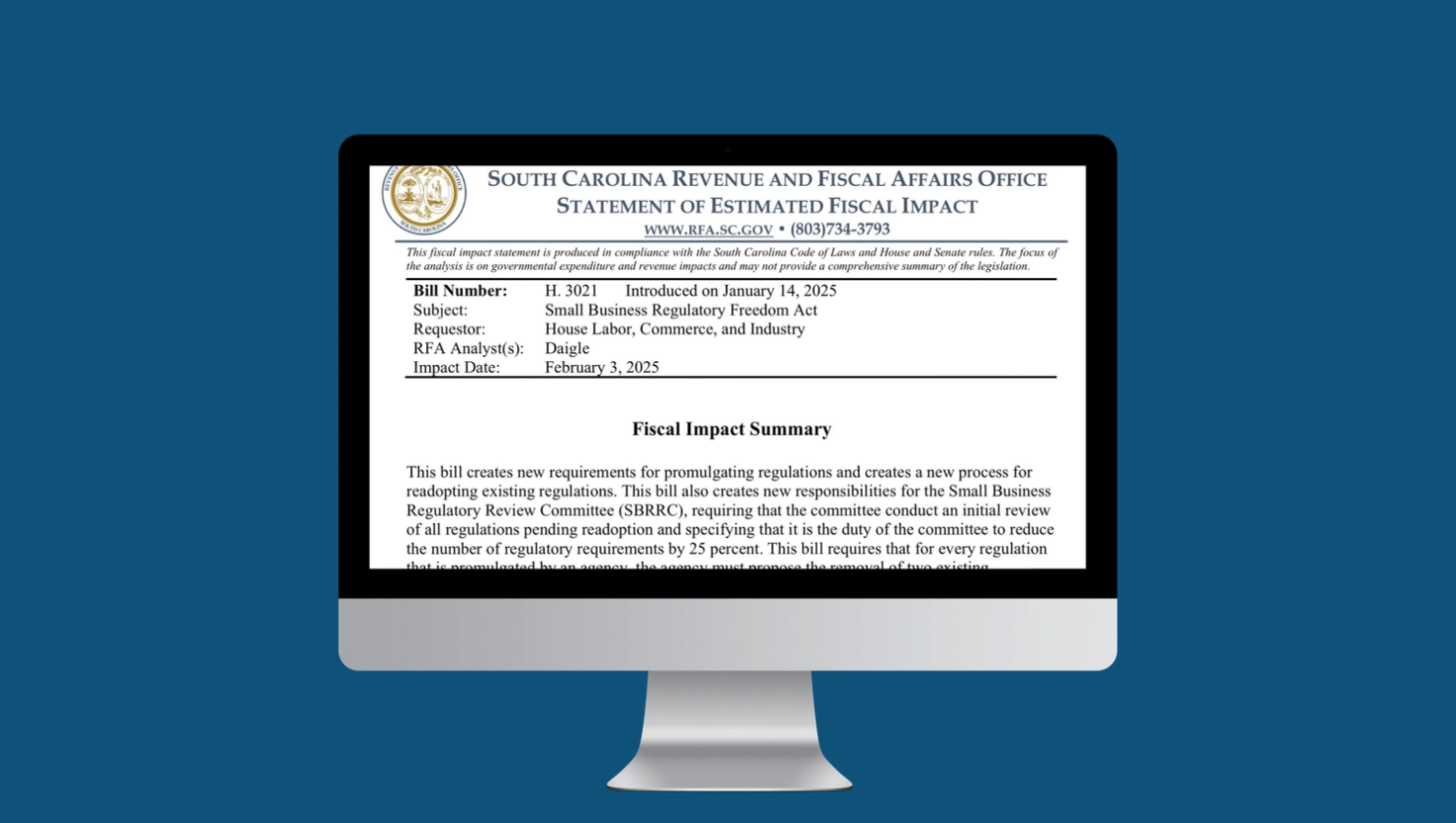
Time to put this lesson to work. Pull up H.3021, the Small Business Regulatory Freedom Act, and read it with your spending signals list in hand.
Your assignment: figure out how much this bill is going to cost taxpayers. Search the text for the signal words, sort what you find into the two categories, and run through the questions from this lesson. Check the fiscal impact statement, and compare what it says against what you found in the text yourself.
Don’t worry about landing on an exact dollar amount. The goal is to spot the unstoppable spending. Remember, every dollar the state spends has to come from somewhere, and taxpayers are the source.
Disclaimer: The views expressed in this article are those of the author and do not constitute legal or professional advice. ConservaTruth assumes no liability for any actions taken based on this content. Read more.

Subscribe to ConservaTruth's Email Newsletter for curated insights on South Carolina's legislative activities and conservative viewpoints, delivered straight to your inbox! With vetted and easy-to-understand information, our newsletter empowers you to become an informed and engaged citizen, actively participating in safeguarding our cherished Constitutional values. Don’t miss out on crucial updates—join our community of informed conservatives today!

Comments