
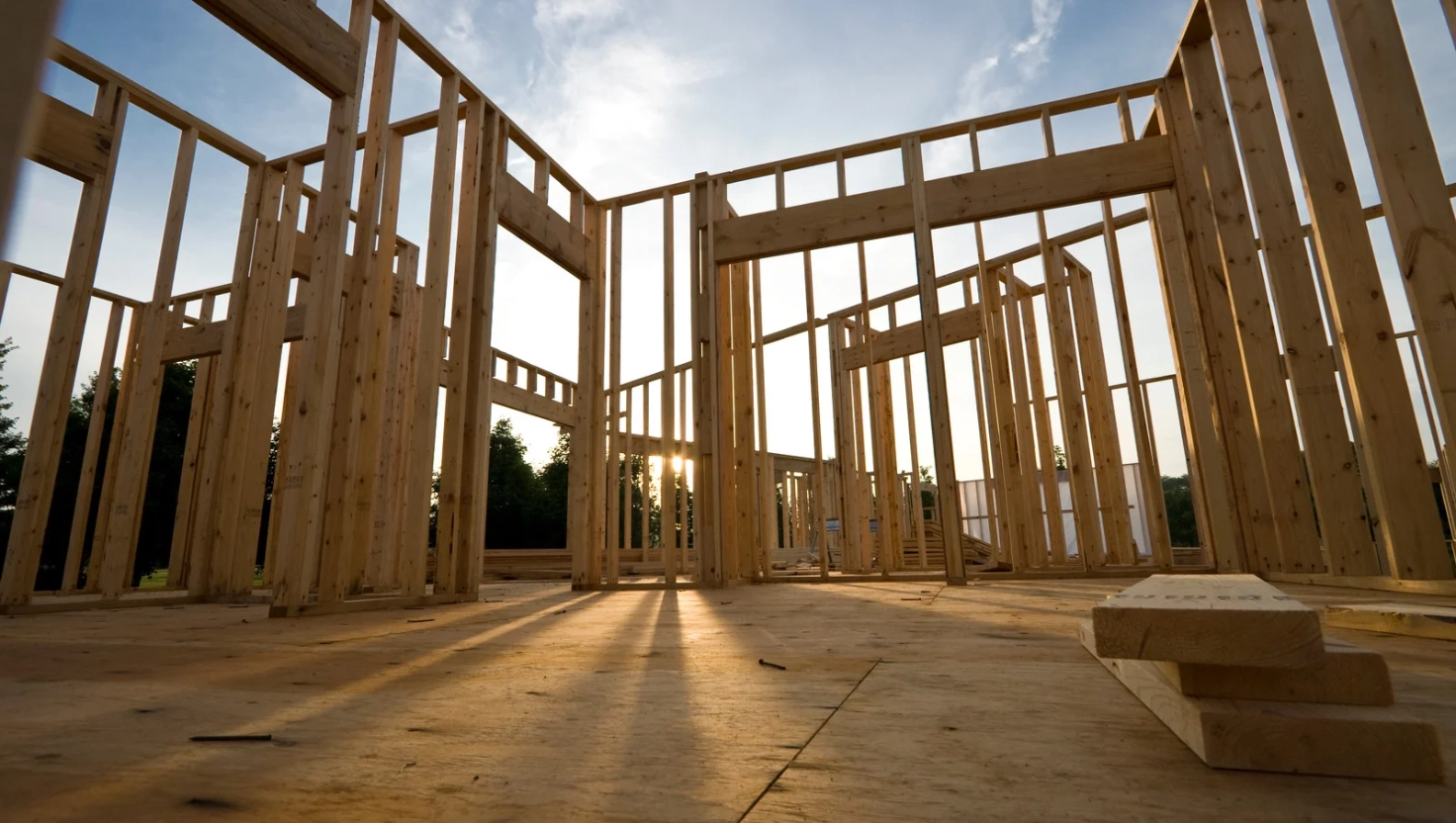

Have you heard? The South Carolina population has exploded, a lot. In fact, our state is among the fastest-growing in the country.
Because of that, a lot of construction is underway, and local governments keep approving development because saying no is legally risky.
But growth puts additional demand on infrastructure and services, which cost more.
To help manage the cost of keeping up with this growth, roads that need widening, water and sewer systems that need expanding, fire stations and schools that need building, local governments have tried moratoriums, impact fees, and sales tax increases. None of it has been enough. And when local governments tried impact fees to make growth pay for itself, the Home Builders Association of South Carolina sued over those, too, more than once. One of those cases, against York County over school impact fees, went all the way to the South Carolina Supreme Court.
According to press coverage, the bill’s sponsor said local governments are afraid of being sued by developers. That’s where S. 227 comes in to codify concurrency programs, a stronger and less lawsuit-prone tool.
(Note: we are reading the amended version reported out of committee on March 12, 2026, not the original introduced version.)
Section 6-29-720(C)(8): “Concurrency programs” condition land development approval on public facility and service adequacy, also referred to as “adequate public facility programs.” Such programs shall ensure that growth and infrastructure investment proceed consistently with locally adopted comprehensive plans and shall not be administered to prevent or delay development where proportionate mitigation is available.
Read that last line again. “Shall not be administered to prevent or delay development where proportionate mitigation is available.” If the developer can pay, the program can’t stop them.
So what is the best way to describe S.227? Like a circle.
It begins with section 6-29-720(C)(8), circles around like this.
Subsection (a) What can be evaluated.
Subsection (b) Facilities are deemed “adequate” if capacity exists now, if it is fully funded within the first three years of a capital improvements program, or if it will be provided through a binding agreement under subsection (f).
Is the infrastructure adequate? If yes, you move forward. If no…move to ( c)
Subsection (c) The standards, and failure to meet them, do not result in denial if you pay.
Subsection (d) The procedural rules the program must follow.
Subsection (e) How the local government calculates your bill and collects payment. “e) A governing authority may require sufficient contributions to offset a development's proportionate share of facility impacts,”
Subsection (f) The binding agreements, performance bonds, deed-recorded obligations.
Subsection (g) What happens when it all falls apart. Government, you have to do something. Pick one: fix your capital plan, lower the standard, or impose a moratorium. But, “Failure to act does not require automatic denial where mitigation is available.” So even if the government picks none of the three, developers still get approved as long as they keep paying.
Subsection (h) Stay in your own jurisdiction.
Subsection (i) Remember, local governments are afraid of being sued. Subsection (i) is the solution the bill offers.
“A concurrency program adopted in compliance with this subsection is presumed to be a valid exercise of police power and not an unconstitutional taking or equal protection violation.”
To win a lawsuit challenging a concurrency program under this bill, you have to prove ONE of these four things, and you have to prove it by clear and convincing evidence:
The program made your property worthless.
The government had no rational reason at all for what it did.
The government treated your property differently from a property in the same situation, and had no rational reason for doing so.
The government was denying everyone, even people who offered to pay, over and over again, as a pattern.
And you have to pay for the attorneys to prove it. The government defends itself with taxpayer-funded attorneys, including your taxes.
Now, think who will be able to afford this? Not small developers or an average citizen. But a well-funded developer can afford the attorneys, expert witnesses, and all the resources to secure a win.
Does this litigation shield actually protect local government from saying no to a powerful developer? Or does the bill ensure they seldom have to say no because the developer can easily pay their way to build?
Also, does it protect local governments from being meaningfully challenged for ANYTHING they do under this program, as long as they follow the procedural steps in the bill?
Subsection (j) Affordable housing skips everything. “A development in which at least fifty percent of units are deed-restricted at or below eighty percent of area median income, or that receives federal, state, or local affordable housing financing, is exempt from concurrency requirements, subject to applicable building codes, life-safety standards, and utility connection obligations.”
The whole thing is a circle. Each subsection feeds into the next and loops back to the start.
A few more things the bill text reveals:
Schools are not part of the adequacy evaluation. “a) Concurrency programs may not condition approval on the availability or adequacy of schools, parks, or libraries and are limited to”
The bill does not define “adequate”. It only tells you in subsection (b) when a facility is deemed adequate. And those three conditions are: capacity exists now, it is in a funded plan within three years, or the developer will build it under a binding agreement.
Could this apply to a citizen who wants to build a small building? It seems so. S.227 carve-outs are subsection (d)(iv), which says the program must “provide exemptions or streamlined review for development with minimal facility impacts,” and subsection (j), which exempts qualifying affordable housing. But “minimal facility impacts” is not defined in the bill. Also, during a recent hearing, it was stated that the program evaluates individual projects.
So, overall, what is the point of this bill when local governments already have this authority? Some counties are already doing this. Maybe S.227 is to give local government a legal fortress around a tool they arguably already had.
What a confusing bill.
Think about this, too. Why would local government even want to put more shackles on building? We get it, the overbuilding is a real problem. But if someone wants to build on their property and a buyer wants to buy what they build, that is a transaction between private parties. The market should be doing what markets do. If too many homes get built, demand softens, prices adjust, and builders slow down. Let the market correct itself. How dare we suggest letting the free market deal with it?
Disclaimer: The views expressed in this article are those of the author and do not constitute legal or professional advice. ConservaTruth assumes no liability for any actions taken based on this content. Readers are encouraged to review the bill text themselves. Read more.

Subscribe to ConservaTruth's Email Newsletter for curated insights on South Carolina's legislative activities and conservative viewpoints, delivered straight to your inbox! With vetted and easy-to-understand information, our newsletter empowers you to become an informed and engaged citizen, actively participating in safeguarding our cherished Constitutional values. Don’t miss out on crucial updates—join our community of informed conservatives today!

Comments