

Well, now, look at this. The Free Man's Creed. That title already deserves a small brass plaque and a folding-chair audience.
Let's read it together:
I do not choose to be a common man. It is my right to be uncommon. If I can seek opportunity, not security, I want to take the calculated risk to dream and build, to fail and to succeed. I refuse to barter incentive for dole. I prefer the challenges of life to guaranteed security, the thrill of fulfillment to the stale calm of utopia. I will not trade freedom for beneficence, nor my dignity for a handout. I will never cower before any master, save my God. It is my heritage to stand erect, proud and unafraid. To think and act for myself, enjoy the benefit of my creations; to face the whole world boldly and say, "I am a free American."
These are incredible principles. Worth respecting, worth holding onto, the kind of words a free people should be able to read and still see their own life in. The only thing worth checking is whether a man can still go out and live this way.
Let’s see, line by line, how our lawmakers stack up against these lofty words.
"I do not choose to be a common man. It is my right to be uncommon."
The legislators have worked patiently on this one. Every session codifies a little more control, and the uncommon man has slowly been made common.
So the man can still choose to be uncommon. He'd better make sure he doesn't trip over one of the smothering laws that have whittled that choice down until it loosely resembles what the line actually promises. The words flex genuine patriotic muscle, which is exactly why it stings to watch how little uncommon living the code still permits.
"If I can seek opportunity, not security, I want to take the calculated risk to dream and build, to fail and to succeed. I refuse to barter incentive for dole."
Whew, that one lands strong. Kinda brings a tear to your eye, right?
Thank you, legislators, for giving the common man a new frontier, eligibility. Staying eligible has become its own occupation. The common man may dream, build, and work hard, provided he doesn’t earn enough to lose the government subsidy that props it all up.
He can open a school, run a business, or pay off debt, as long as he doesn’t become so productive that he disqualifies himself from the help that now makes productivity possible.
Dependency is now generous enough to solve the old dilemma entirely. He no longer has to barter incentive for the dole. The dole has already been added to the household budget.
"I prefer the challenges of life to guaranteed security, the thrill of fulfillment to the stale calm of utopia. I will not trade freedom for beneficence, nor my dignity for a handout."
Guaranteed security sounds noble, and boy, do legislators know how to use that. That is why legislators use it so well. They claim it helps, protects, is compassionate, or whatever word polls best that week, and somehow, the common man ends up with another burden placed on him to feel safe.
Burdens create compliance, and compliance, of course, needs structure, so the nanny state has accepted its solemn duty.
Apparently, the common man must be managed into moral behavior because leaving him to his own judgment poses a serious risk. He might reach a conclusion without permission, and independent thinking, after all, gets in the way of good, obedient citizenship.
So, common man, enjoy the security grounded in what you’re allowed to do. Thinking hasn’t been banned yet, although one should never underestimate the ambition of a subcommittee. The bill is already in committee, sponsored by three legislators who promise it will only apply to certain thoughts, in certain neighborhoods, at certain times of day.
"I will never cower before any master, save my God. It is my heritage to stand erect, proud and unafraid."
Would he really never cower before any master? Or did he forget that part after the legislators wrote back with a 30-page handbook explaining who he reports to and on what schedule?
His master has become the police power of the state.
"To think and act for myself, enjoy the benefit of my creations; to face the whole world boldly and say, 'I am a free American.'"
Oh, how the common man relishes his freedom to think and act. Of course, he gets it all mixed up. Legislators are happy to let him exercise that freedom, provided he chooses wisely and stays within the proper legal boundaries.
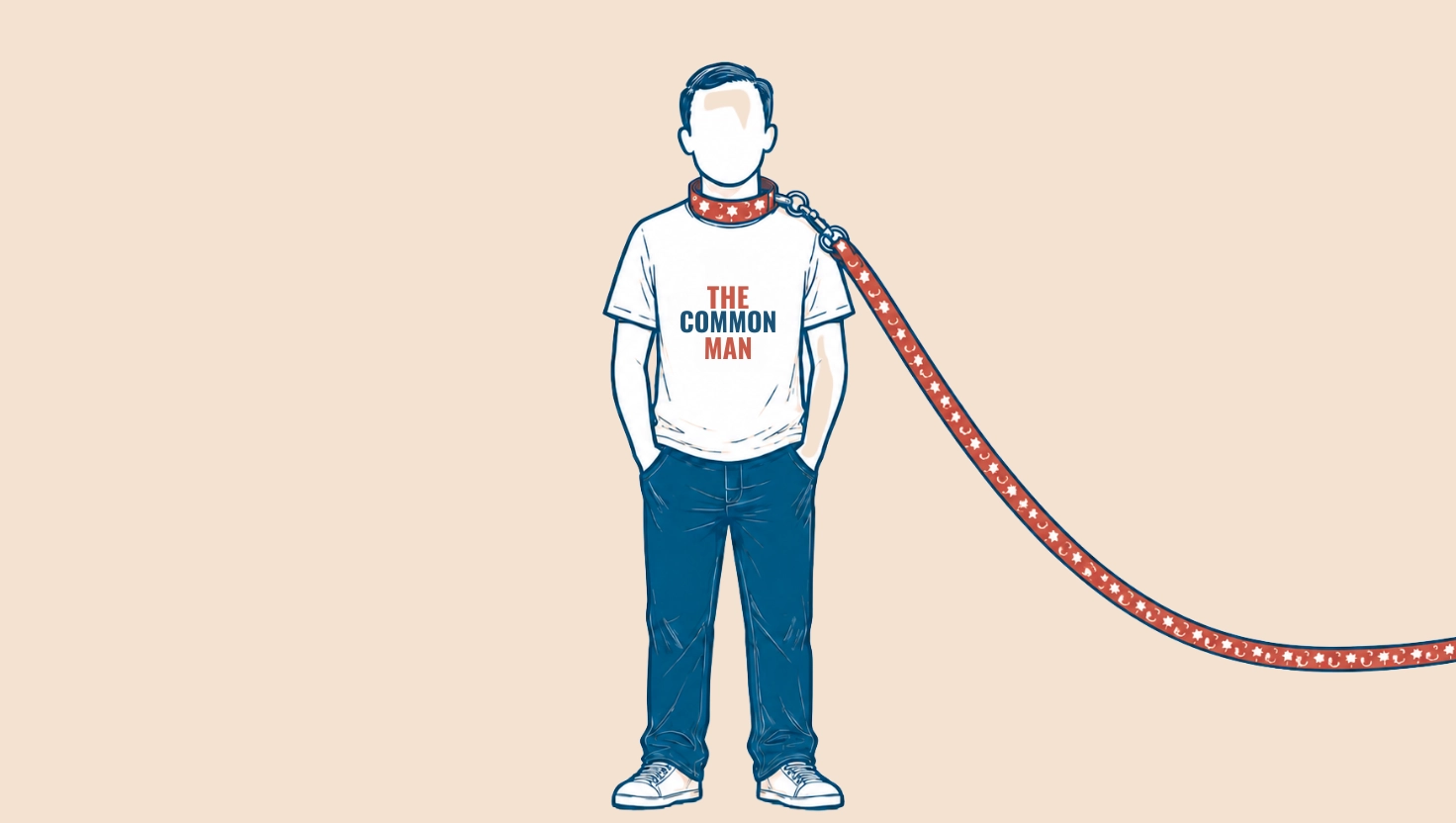
He is a free American with a leash just long enough to let him believe it. The leash is decorative, woven in the colors of the American flag and the South Carolina palmetto. It’s reissued every legislative session, each time with a slight adjustment, a little shorter than before. The common man can face the whole world boldly, go right to the end of it, and admire the view. Tugging is permitted, within reason. The resistance is gentle but firm enough to remind him who holds the other end. A leash this length lets him feel like a free American.
Disclaimer: The views expressed in this article are those of the author and do not constitute legal or professional advice. ConservaTruth assumes no liability for any actions taken based on this content. Read more.

Subscribe to ConservaTruth's Email Newsletter for curated insights on South Carolina's legislative activities and conservative viewpoints, delivered straight to your inbox! With vetted and easy-to-understand information, our newsletter empowers you to become an informed and engaged citizen, actively participating in safeguarding our cherished Constitutional values. Don’t miss out on crucial updates—join our community of informed conservatives today!


Comments